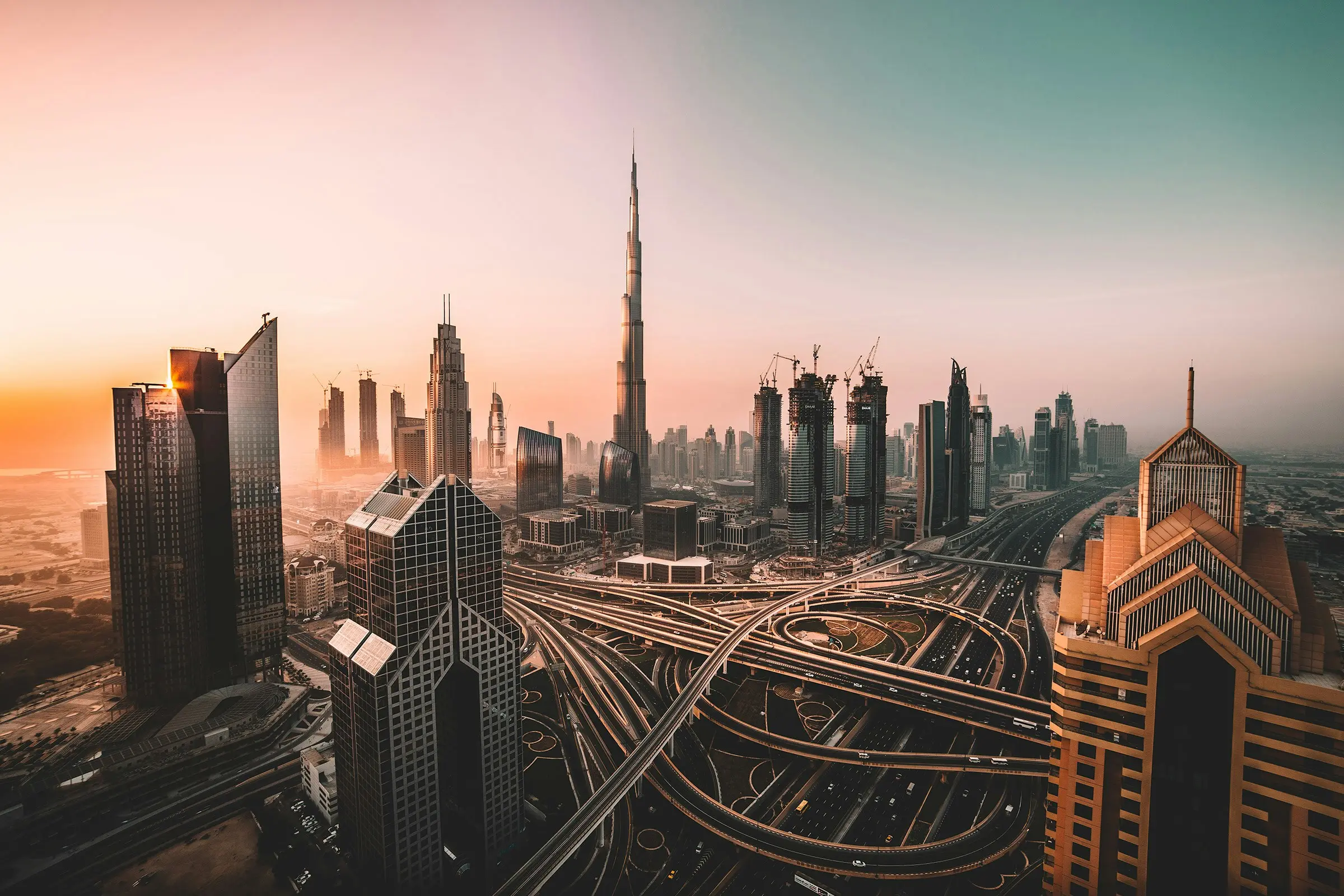
JVC vs JLT: Which Affordable Dubai Community Offers Better ROI?
Compare Jumeirah Village Circle and Jumeirah Lake Towers - two popular affordable communities. Analyze prices, yields, lifestyle, and find which offers better investment returns.

Key Takeaways
- JVC offers higher gross rental yields (7% to 9.5% for studios) compared to JLT (6% to 7.5%).
- Entry prices are about 16% lower in JVC, with studios starting around AED 500,000 vs. AED 600,000 in JLT.
- JLT has superior public transit with two dedicated metro stations (DMCC and Sobha Realty), whereas JVC requires a car or taxi.
- JVC service charges are 20% to 30% lower than JLT, which helps preserve net rental returns.
- Choose JVC for maximum yield and suburban townhouse options; choose JLT for high walkability, established infrastructure, and office commuter demand.
The Affordable Investment Showdown: JVC vs JLT
Jumeirah Village Circle (JVC) and Jumeirah Lake Towers (JLT) stand as two of the most popular, high-performing residential communities in Dubai. Representing the mid-market or affordable luxury segments, both areas are heavily favored by real estate investors seeking strong rental yields and stable capital growth. However, beneath their shared reputation for value, they offer completely different lifestyles, urban layouts, and financial dynamics.
Whether you are a yield-first investor looking for entry-level apartments, a family looking for townhouse living, or an end-user seeking the convenience of a high-rise urban district with metro access, choosing between JVC and JLT requires a deep dive into the numbers. This guide breaks down the property pricing, historical performance, transaction volumes, rental yields, transit infrastructure, and future supply pipelines for both communities in 2026.
Quick Comparison
| Factor | Jumeirah Village Circle (JVC) | Jumeirah Lake Towers (JLT) | Winner |
|---|---|---|---|
| Primary Master Developer | Nakheel | DMCC (Dubai Multi Commodities Centre) | Tie |
| Entry Price (Studio) | AED 500K - 650K | AED 600K - 750K | JVC |
| Average Price per Sqft | AED 1,448 - AED 1,469 | AED 1,705 - AED 1,780 | JVC (Value) |
| Average Gross Rental Yield | 7.0% - 9.5% | 6.0% - 7.5% | JVC |
| Metro Connectivity | None (Requires drive/taxi) | 2 Dedicated Stations | JLT |
| Community Layout | Low-to-mid-rise suburban, radial roads | High-rise clusters around lakes | Depends on Vibe |
| Service Charges (per Sqft) | AED 12 - AED 16 | AED 15 - AED 25 | JVC |
| Secondary Market Liquidity | Excellent (High Volume) | Very High (Fast Resale) | JLT |
| Property Diversity | Apartments, townhouses, villas | High-rise apartments only | JVC |
Location and Community Overview
Jumeirah Village Circle (JVC)
Developed by Nakheel, Jumeirah Village Circle is a radial master community situated along Al Khail Road (E44) and Sheikh Mohammed Bin Zayed Road (E311). Spanning over 5.6 square kilometers, JVC was designed as a suburban sanctuary that balances family life with budget-friendly residential offerings. The area is characterized by its abundance of public green parks (over 30 active parks), community centers, and low-to-mid-rise buildings.
Unlike JLT's vertical cityscape, JVC features a highly diverse catalog of property types. Investors and residents can choose between compact studio apartments, expansive family duplexes, townhouses, and fully detached villas. JVC caters heavily to young couples, families with children, and mid-income expats who prioritize space, tranquility, and affordable rental entries.
Jumeirah Lake Towers (JLT)
Jumeirah Lake Towers is a mature, high-density, vertical community developed under the DMCC free zone authority. Located directly opposite Dubai Marina along Sheikh Zayed Road (E11), JLT covers roughly 2 square kilometers and is organized into 26 clusters (A to Z). Each cluster contains three high-rise towers designed for residential, commercial, or mixed-use purposes.
JLT’s urban design centers around three artificial lakes and a massive central park. The community is highly walkable, pedestrian-friendly, and features a vibrant street level packed with over 300 restaurants, bars, beauty salons, and retail outlets. JLT caters primarily to corporate professionals, single expats, and couples who want a fast-paced urban lifestyle, close proximity to major commercial hubs like DMCC and Dubai Marina, and easy access to public transportation.

Price Comparison and Cost of Entry
Property acquisition costs in Dubai have experienced sustained upward momentum. JVC remains one of the few established, centrally located areas where investors can acquire quality real estate at moderate prices. JLT, due to its premium location along Sheikh Zayed Road, commands a structural price premium over JVC.
JVC Real Estate Pricing (2026 Estimates)
- Studios: AED 500,000 to AED 700,000 (Average size: 400 - 500 sqft)
- 1-Bedroom Apartments: AED 750,000 to AED 1,100,000 (Average size: 700 - 850 sqft)
- 2-Bedroom Apartments: AED 1,150,000 to AED 1,600,000 (Average size: 1,100 - 1,300 sqft)
- Townhouses (3-4BR): AED 2.2 Million to AED 3.5 Million
- Villas: AED 3.8 Million to AED 6 Million+
In terms of value-for-money, the average sales price per square foot in JVC ranges between AED 1,448 and AED 1,469. This makes it highly competitive for investors who want to maximize the physical square footage they secure for their capital.
JLT Real Estate Pricing (2026 Estimates)
- Studios: AED 650,000 to AED 850,000 (Average size: 380 - 450 sqft)
- 1-Bedroom Apartments: AED 950,000 to AED 1,400,000 (Average size: 680 - 800 sqft)
- 2-Bedroom Apartments: AED 1,450,000 to AED 2,200,000 (Average size: 1,000 - 1,200 sqft)
- 3-Bedroom Apartments: AED 2.3 Million to AED 3.8 Million
JLT features a higher pricing benchmark, with average sales prices per square foot ranging between AED 1,705 and AED 1,780. There are no townhouse or villa options available in JLT, meaning investors looking for land-attached assets must focus on JVC.
Winner: JVC — JVC offers a 15% to 20% lower entry cost for apartments and significantly cheaper price-per-square-foot rates.
Rental Yields and Net ROI
For rental investors, gross yield is only one part of the equation. Net rental yields — what remains after subtracting service charges, maintenance fees, and property management expenses — dictate actual profitability. JVC's low acquisition costs and comparatively lower maintenance structures allow it to deliver some of the highest net rental returns in Dubai.
JVC Rental Yield Profile
- Studios: 8.0% - 9.5% Gross (6.5% - 7.8% Net)
- 1-Bedroom Apartments: 7.5% - 8.5% Gross (6.0% - 7.0% Net)
- 2-Bedroom Apartments: 7.0% - 7.8% Gross (5.5% - 6.5% Net)
- Townhouses/Villas: 5.8% - 6.8% Gross (4.8% - 5.5% Net)
Smaller units (studios and 1-beds) in JVC consistently outperform larger properties in yield efficiency. Because JVC is highly popular with young expatriates moving to Dubai, occupancy rates hover above 92-95% year-round.
JLT Rental Yield Profile
- Studios: 7.0% - 8.2% Gross (5.2% - 6.2% Net)
- 1-Bedroom Apartments: 6.5% - 7.5% Gross (4.8% - 5.8% Net)
- 2-Bedroom Apartments: 6.0% - 7.0% Gross (4.5% - 5.2% Net)
- 3-Bedroom Apartments: 5.5% - 6.5% Gross (4.0% - 4.8% Net)
While JLT yields are very healthy compared to mature European or North American markets, they are compressed relative to JVC. This compression is a result of higher initial purchase prices and higher recurring operational overheads.
Winner: JVC — Across all comparable apartment types, JVC yields are approximately 0.5% to 1.5% higher in both gross and net terms.
Service Charges: The Net Return Killer
Service charges in Dubai are determined by the Real Estate Regulatory Agency (RERA) and are billed annually to owners on a per-square-foot basis. They cover building insurance, elevators, cleaning, security, and community maintenance. High-rise developments with complex amenities and district cooling (chiller) systems incur higher service charges.
- JVC Service Charges: JVC apartments typically range from AED 12 to AED 16 per square foot. Many buildings utilize individual, split-unit AC systems, meaning tenants pay their own cooling bills directly to DEWA, shielding the landlord from high district cooling service fees. Townhouses in JVC enjoy even lower fees, often ranging between AED 3 to AED 6 per square foot for common area upkeep.
- JLT Service Charges: JLT towers generally range from AED 15 to AED 25 per square foot. Because JLT is made up of tall, high-maintenance towers (typically 35 to 45 stories), and utilizes district cooling systems (Empower), landlords often bear higher service fees. These costs directly eat into net rental yields, making JLT less cash-flow efficient than JVC.
Winner: JVC — JVC service fees are 20% to 35% lower than JLT, which preserves the landlord's net income.
Transit, Infrastructure, and Metro Access
Transportation convenience is one of the most critical elements for tenants in Dubai. This is where JLT holds an absolute advantage over JVC.
JLT Metro and Walking Infrastructure
JLT is served directly by two major metro stations on the Red Line:
- Sobha Realty Metro Station (formerly Dubai Marina / DAMAC Properties Station)
- DMCC Metro Station (formerly JLT Station)
These stations sit right at the edge of the community, allowing thousands of residents in JLT to walk to the metro within 5 to 10 minutes. Furthermore, JLT features pedestrian bridges connecting it to Dubai Marina and has direct access to the Dubai Tram network. Residents can easily live in JLT without owning a car, saving on transit costs.
JVC Transit Limitations
JVC does not have direct metro access. The closest metro stops are the Sobha Realty or DMCC stations in JLT, which require a 12 to 20-minute drive or taxi ride depending on traffic. While the RTA runs feeder bus routes (such as Jo1) connecting JVC to the Mall of the Emirates Metro Station, commute times can be long. For JVC residents, owning a car or relying on taxi services is highly recommended. Internal road layouts in JVC also experience peak-hour bottlenecks at major entry/exit gates connecting to Al Khail Road.
Winner: JLT — JLT's direct access to two metro stations, tram networks, and walkability makes it vastly superior for public transit.
Transaction Volume and Market Liquidity
Liquidity represents how quickly an investor can convert a property back into cash. In Dubai, transaction volume is an excellent proxy for liquidity.
According to data from the Dubai Land Department (DLD) compiled by Bayut, JVC recorded approximately 16,830 residential sales transactions during 2025. This makes JVC one of the single most active real estate markets in the UAE. The massive volume is driven by a constant flow of new off-plan launches, affordable mid-market listings, and high demand from first-time home buyers.
JLT, while highly active, operates on a different scale. Because JLT is a mature, fully built-out community with very few undeveloped plots, its annual transactions hover around 3,500 to 4,500 sales. JLT's transaction mix is dominated by ready, secondary-market properties. While secondary sales in JLT are highly liquid and execute quickly due to demand from working professionals, JVC's massive off-plan market gives it a higher raw transaction volume.
Winner: JLT (Secondary Market Liquidity) / JVC (Raw Volume) — JLT is easier for quick secondary sales due to low supply, but JVC dominates overall market activity.

Future Supply and Capital Appreciation Risks
Understanding the supply pipeline is essential to protect capital. Oversupply can lead to rental stagnation and downward pressure on property prices.
- JVC Supply Risk: JVC is still expanding. Dozens of developers (including Binghatti, Ellington, and minor private firms) continue to launch high-density off-plan projects in the community. This continuous supply pipeline ensures JVC remains a hot spot for off-plan investing, but it presents a risk of localized oversupply. Landlords must compete against brand-new completions, which can limit near-term rental growth. However, this supply is balanced by massive demand; JVC appreciated by a strong margin over the last 5 years.
- JLT Supply Risk: JLT has virtually no supply risk. The master community is fully developed, and vacant plots are non-existent, with only a few premium mixed-use projects (like DMCC's Uptown Tower phase 2) representing new additions. This structural scarcity protects JLT landlords from oversupply risks. As demand for properties near Dubai Marina increases, JLT's fixed inventory acts as a natural buffer, ensuring stable capital appreciation and tenant demand.
Winner: JLT — JLT offers much lower supply risk, making it a safer bet for long-term capital preservation.
Investment Recommendation: Which Should You Choose?
Choose JVC If:
- Maximum Yield is Your Goal: You want to secure gross yields of 8-9.5% and net returns above 6.5%.
- You Have a Lower Capital Budget: You want a quality studio or 1-bed starting under AED 600,000.
- You Prefer Diversified Property Types: You want to invest in townhouses or family villas rather than high-rise towers.
- Lower Service Charges Matter: You want to avoid high district cooling/chiller fees eating into your margins.
Choose JLT If:
- Metro Access is Essential: You want properties that are highly attractive to corporate commuters who do not drive.
- You Prioritize Scarcity and Low Supply Risk: You want to invest in a mature, land-locked community with no room for oversupply.
- Walkability and Lifestyle Drive Your Choice: You value lakeside walking paths, high-density retail, and a vibrant dining scene.
- You Value Corporate Demand: You want tenants who work in the DMCC free zone and value living close to the office.
Both JVC and JLT are stellar examples of Dubai's middle-market strength. JVC wins on raw cash flow, entry pricing, and property variety, while JLT wins on location, transit, and structural capital safety.
Compare specific JVC and JLT properties with Sophia AI.
Related Guides
- JVC Investment Guide - Full JVC analysis
- JLT Investment Guide - Full JLT analysis
- Best Areas for Rental Yields - Yield comparison
- Dubai Marina Investment Guide - Premium alternative
Sources and further reading
Area due diligence checklist
Use this guide to understand the community, then validate the exact building or project. Check recent transaction prices, current listings, service charges, access to main roads, commute times, parking, public transport, schools, retail, nearby construction, and future supply. Two properties in the same area can perform very differently if one has a better view, layout, handover date, or building reputation.
For investors, compare gross yield with realistic net yield after service charges, vacancy, furnishing, management, and maintenance. For end users, prioritize daily convenience, noise, traffic patterns, walkability, and long-term livability. The right area decision should balance lifestyle fit with liquidity: a property that is easy to rent or resell gives you more flexibility if your plans change.